The PCW Resource Library

Measure first.Understand more.

A clear, evidence-aware guide to testing, nutrition, cellular infrastructure, mitochondrial science, and physician-supervised care—built to help you ask better questions before you make bigger decisions.

New client pathway

Not sure whereto begin?

We moved the assessment and results-review intake into one clear guided page. It explains why there are two forms, which comes first, and what happens after both are submitted.

01Optimization Assessment
02Client Consent Form
Start here · Both steps required

One page. Every next step.

Follow the guided process, open helpful answers, and move directly into each secure form when you are ready.

Open the Start Here Guide

The guide clearly labels both required forms.

How to read the library

Four evidence lanes.
No blending.

A mechanism is not an outcome. An animal study is not a human trial. What practitioners observe is not the same thing as controlled evidence. We label the difference so you can judge the weight of a claim for yourself.

T1

Authorized or Approved

Exact, indication-specific regulatory language. Approval for one use does not automatically apply to another.

Highest claim precision
T2

Human Clinical Evidence

Findings from studies in people, described with the population, design, and limitations kept visible.

Human data
T3

Preclinical Evidence

Animal, cell, or laboratory findings that can explain a mechanism but do not confirm a human outcome.

Mechanism, not a promise
T4

Practice Observation

Patterns observed in supervised care, kept separate from research and never presented as proof.

Context, not causation
Our rule: Every claim stays in its lane. We will tell you what is known, what is plausible, what remains uncertain, and when a question belongs with your supervising clinician.
The premise · Measure before assuming

“I take fish oil” is a behavior.
Your fatty-acid status is a measurement.

Intake does not tell us what reached the blood, what the starting point was, or whether a meaningful change occurred. Large dried-blood-spot datasets show wide variation in omega-3 status, including among people who report supplement use. That supports a test-and-retest conversation; it does not prove that one branded oil was studied or that a particular result is guaranteed.

The PCW Layer Model

Build the terrain.
Then build outward.

The model turns a shelf of products and services into a sequence you can understand. It begins with objective measurement, supports cellular infrastructure, and reserves clinical therapies for physician-supervised decisions.

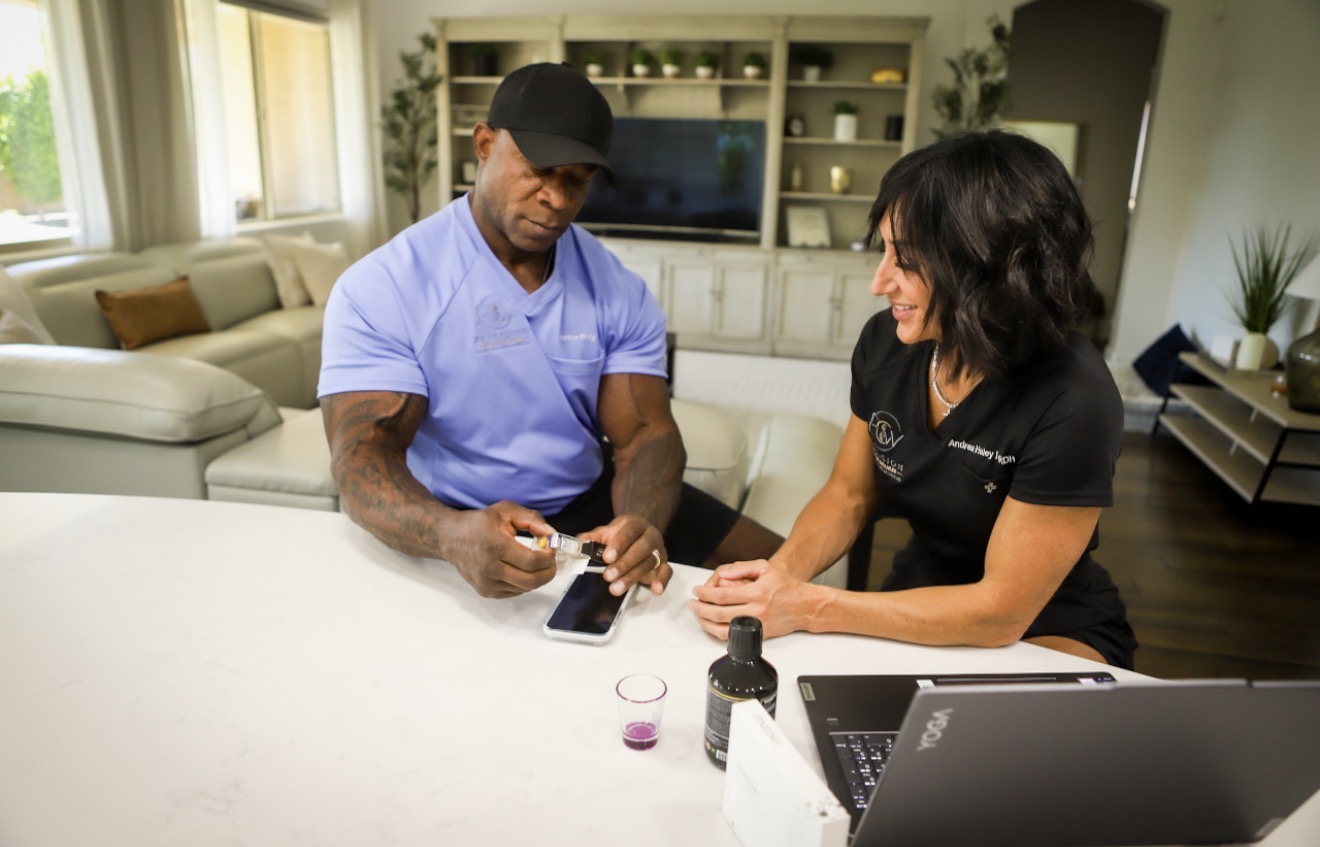
Marcus and Andrea reviewing testing and products at a table
Your data sets the direction · Your care team builds the path

Begin with information that can be repeated and compared. The goal is not maximal testing; it is a useful baseline tied to a decision and a defined review point.

BalanceTestAt-home fatty-acid status and omega balance; establish baseline, then compare at approximately Day 120.
GutTestDigestive and microbiome context interpreted within symptoms, diet, history, and clinical judgment.
Vitamin D & HbA1cCommonly used human biomarkers; meaning depends on the assay, clinical context, medications, and the question being asked.
T2 human measurement

Address foundational barriers before adding complexity. PCW discusses ZinoGene+ here only as a product category and label-led conversation—not as proof of detoxification or disease treatment.

ZinoGene+Placed in the framework as a foundational nutrition product. Exact ingredients, label language, availability, and fit must be verified from the current manufacturer materials.
T1 label onlyT4 sequencing observation

Cell membranes are dynamic structures influenced by fatty-acid status. Human studies show omega-3 intake can change skeletal-muscle mitochondrial membrane composition; that does not by itself prove a treatment outcome.

BalanceOil+Omega-3 nutrition discussed against an objective fatty-acid baseline. Manufacturer claims and antioxidant content must stay tied to the current label.
T1 authorized label claimT2 human membrane dataT3 cardiolipin bridge

Energy metabolism depends on structure, nutrient cofactors, signaling, training, sleep, and recovery. Supporting normal energy-yielding metabolism is not the same as promising more energy.

PhycoSci+ X20Positioned as nutritional infrastructure; use current ingredient and label documentation for any specific claim.
SpiruMax+Nutrient support—not a mitochondrial treatment claim.
ZinoShine+Vitamin D support discussed alongside measured vitamin D status and current label language.
X Gold+Product-category education only until current manufacturer evidence and label wording are verified.
T1 nutrient labelT3 mechanism context

Whole-body systems interact. Fiber fermentation, short-chain fatty acids, immune signaling, training load, sleep, and nutrition shape the environment in which more targeted care takes place.

ZinoBiotic+Fiber and gut-environment support, described without promising a specific disease or microbiome outcome.
Xtend+General nutrient-system support; current label defines the claim boundary.
Protect+Immune-support nutrition—not an infection-prevention or treatment promise.
Viva+Product-category education only until the current label and evidence file are verified.
T1 label claimT2 human nutrition contextT3 pathway context

Peptides, prescriptions, compounded preparations, and other clinical therapies belong under qualified supervision. Approval is product-, population-, and indication-specific. The website provides no doses, stacks, injection instructions, or individual treatment recommendations.

T1 exact indicationT2 human researchT3 preclinical
Cellular infrastructure

A framework—not a product catalog.

Products are shown to explain the role they may occupy in a test-based nutrition conversation. Precision Cellular Wellness does not sell research compounds or prescription drugs through this website, and this resource is not an online shop, dispensary, or promise that any item is appropriate or available.

Measure

BalanceTest, GutTest, Vitamin D, and HbA1c can help define a baseline when the result is connected to a real decision.

T2 human biomarker

Membrane

BalanceOil+ belongs beside fatty-acid measurement. A label claim and a human outcome are not interchangeable.

T1 labelT2 human context

Energy systems

PhycoSci+ X20, SpiruMax+, ZinoShine+, and X Gold+ are presented as nutrition categories, with exact claims limited to current labels.

T1 label boundary

Gut & systems

ZinoBiotic+, Xtend+, Protect+, and Viva+ are described without converting a nutrient role into a disease claim.

T1 label boundaryT3 mechanism context

Retest

A defined review point—often around Day 120 for fatty-acid testing—turns an intervention into something that can be compared with baseline.

T2 measured trend

Clinical layer

Prescription and peptide decisions require current legal, sourcing, safety, and individual clinical verification.

T1 regulatory contextT2 human evidence
Cellular infrastructure · Product by product

What it is.
What the evidence allows.

These cards translate the supplied research brief into a visible evidence file. Manufacturer descriptions identify ingredients and intended nutrition categories. They do not establish disease treatment, individual response, or a combined protocol outcome.

Measurement

BalanceTest

What it is
An at-home dried-blood-spot fatty-acid test reporting 11 fatty acids and calculated balance markers through an independent Oslo laboratory, according to current manufacturer materials.
Evidence lane
Objective human measurement. A marker can establish status and trend; it does not diagnose a disease or prove that one supplement caused a change.
T2 human biomarker
Verify the current test report, laboratory, certifications, and marker definitions before publishing exact specifications.
Measurement stack

GutTest · Vitamin D · HbA1c

What it is
Separate measurements that can add digestive, nutrient-status, and longer-term glucose context when connected to the person’s symptoms, history, medications, and clinical question.
Evidence lane
Established biomarkers vary in meaning by assay and population. More testing is not automatically more useful.
T2 human measurement
Clinical interpretation and test availability require current provider verification.
Foundational nutrition · formula verified

ZinoGene+

What it is
The current one-tablet formula lists 200 mg curcumin extract (170 mg curcuminoids), 125 mg quercetin, 125 mg fucoidan, 25 mg fisetin, 1.25 mg piperine, plus vitamin C and zinc.
Evidence lane
Official nutrient statements support oxidative-stress protection and normal DNA synthesis. They do not establish a finished-product anti-aging or senolytic outcome.
T1 formula + nutrient claimsT3 ingredient mechanisms
Product-name searches found no ZinoGene+-specific human outcome trial indexed in PubMed or ClinicalTrials.gov as of July 30, 2026.
Membrane nutrition · composition verified

BalanceOil+

What it is
Fish oil, extra-virgin olive oil and vitamin D3. The standard olive component is specified at 330 mg/kg hydroxytyrosol + tyrosol and 750 mg/kg total olive polyphenols; Premium R.E.V.O.O. is specified at 1,300 and 2,650 mg/kg respectively.
Evidence lane
The standard label reports 2.2 mg total olive polyphenols per 7.5 mL. Ingredient concentrations are not a hydroxytyrosol-only serving dose. Human membrane data and preclinical cardiolipin biology remain separate lanes.
T1 current formulationT2 human membrane dataT3 cardiolipin
Exact antioxidant profile documented; causal and hydroxytyrosol-only serving claims remain intentionally bounded.
Spirulina extract

PhycoSci+ X20

What it is
A liquid Spirulina maxima extract positioned by the manufacturer as a concentrated source of naturally occurring phycocyanin.
Evidence lane
Antioxidant and cell-signaling mechanisms are research context—not proof of improved energy, recovery, or performance in an individual.
T1 labelT3 mechanism
Whole-food algae

SpiruMax+

What it is
Current manufacturer materials describe tablets containing naturally derived Spirulina maxima.
Evidence lane
A nutrient source can complement a plan. It should not be described as a mitochondrial treatment or as producing a defined performance outcome.
T1 current label
Measured nutrient support

ZinoShine+

What it is
Vitamin D with broad-spectrum magnesium, according to current manufacturer materials.
Evidence lane
Authorized nutrient claims belong to the ingredients and conditions of use. PCW places the product beside measured vitamin D status rather than assuming deficiency or response.
T1 nutrient claimsT2 measured status
Botanical nutrition

X Gold+

What it is
Current manufacturer materials describe liquid turmeric-root extract with piperine from black pepper.
Evidence lane
Ingredient mechanisms do not establish a disease, inflammation, or recovery outcome for the finished product.
T1 labelT3 mechanism context
Medication, bleeding-risk, and interaction questions belong with the supervising clinician.
Fiber infrastructure

ZinoBiotic+

What it is
A tailored blend of eight natural sources of dietary fiber, according to current manufacturer materials.
Evidence lane
Fiber fermentation and short-chain-fatty-acid biology support the gut-to-energy hypothesis. They do not prove that this product activates AMPK/PGC-1α or treats a gut condition.
T1 labelT3 pathway bridge
Multi-nutrient support

Xtend+

What it is
A multi-immune food supplement described by the manufacturer as containing 22 naturally derived micro- and phytonutrients.
Evidence lane
Energy metabolism, bone, and immune claims must remain attached to the qualifying nutrient and authorized wording—not generalized to disease prevention.
T1 nutrient claim
Immune nutrition · sport registry checked

Protect+

What it is
Current manufacturer materials describe vegan beta-glucans with naturally derived vitamins C and D3.
Evidence lane
Normal immune-function support is not infection prevention, treatment, or an immunity guarantee. The live Informed Sport registry lists Protect+ among certified Zinzino products.
T1 current labelT1 live sport registry
Athlete use remains exact-product, exact-flavor and exact-batch specific; registry presence does not establish efficacy.
Daily nutrient support

Viva+

What it is
Current manufacturer materials describe saffron stigmas, magnesium, iodine, and vitamin C.
Evidence lane
Use label-defined nutrient claims only. Saffron or mood-related ingredient research does not automatically establish an outcome for the finished product.
T1 current labelT3 ingredient context
Product-file rule: the current label defines what can be said about the product. Ingredient studies can explain scientific interest, but they cannot be silently transferred to the finished formula, a person, or the entire PCW sequence.
How the layers connect

Five bridges.
One honest caveat.

These bridges connect separate bodies of evidence. They help explain sequencing, but the combined PCW sequence has not been established as a single intervention in human trials.

01

Membrane & Cardiolipin

Human nutrition research and preclinical cardiolipin research occupy different lanes. Their convergence is a hypothesis-generating bridge.

T2 human + T3 preclinical
02

Gut & AMPK / PGC-1α

Fiber fermentation produces short-chain fatty acids. Laboratory research links those signals with energy-regulation pathways.

T3 preclinical bridge
03

Resolution Before Repair

Inflammation resolution and tissue repair are related but distinct phases. Supporting the environment and triggering repair are not the same job.

T3 mechanistic sequence
04

Two-Sided Oxidative Control

Reducing excess reactive-oxygen production at its source differs from buffering downstream oxidative stress.

T3 mechanism distinction
05

Measurement

Foundation markers can be repeated. Many emerging therapies do not have an equivalent consumer test that proves individual response.

T2 measurement + T4 practice
Flagship bridge 01

Membrane → Cardiolipin

Separate evidence streams, shown without turning a plausible connection into a proven combination outcome.

Measured fatty-acid statusRepeatable human biomarker context.T2 human
Mitochondrial membrane compositionHuman omega-3 supplementation research shows composition can change.T2 human
Cardiolipin biologyMechanistic and preclinical work explains why researchers study this inner-membrane phospholipid.T3 preclinical
Elamipretide / FORZINITYThe approved product has an exact Barth syndrome indication; this does not validate general SS-31 wellness use or a nutrition–drug interaction.T1 exact indication
Flagship bridge 04

Two-sided oxidative control

“Antioxidant” is not one job. Source-side production and downstream buffering are biologically different concepts.

Source side

Mitochondrial efficiency, inflammation, training load, sleep, and metabolic context influence how reactive species are produced.

T3 mechanism
Buffer side

Endogenous enzymes and dietary compounds participate in redox buffering. More is not automatically better, and a mechanism is not an outcome.

T2 nutrition contextT3 mechanism
Different levers · no proven combined protocol outcome
Bridge 02

Gut → AMPK / PGC-1α

A plausible signaling bridge, not a product-outcome claim.

Dietary fiber reaches the colonSubstrate varies by fiber, diet, microbiome, and tolerance.T1 label
Microbial fermentationShort-chain fatty acids are produced in a person-specific ecosystem.T2 human biology
Energy-sensing pathwaysLaboratory work links these signals with AMPK and PGC-1α.T3 mechanism
No proven finished-product outcomeThe bridge does not establish activation, mitochondrial change, or a clinical result from ZinoBiotic+.T3 boundary
Bridge 03

Resolution before repair

Related phases should not be collapsed into one “healing” promise.

Inflammatory signalA protective response can become prolonged or dysregulated.T2 human biology
Active resolutionSpecialized mediators help researchers describe a return toward homeostasis.T3 mechanism
Repair and remodelingDistinct cells, signals, substrate, load, and time influence tissue repair.T3 mechanism
No sequence promiseNutrition plus a peptide has not been proven as a combined human protocol.T3 boundary
Bridge 05

Measure → decide → retest

The most practical bridge is the one that can be checked again.

Define the questionTesting should answer a decision, not create noise.T4 workflow
Record the baselineUse a repeatable human marker and note the wider clinical context.T2 measurement
Apply one coherent planCurrent labels, safety, interactions, and supervision define the boundary.T1 current rules
Retest and reviewA trend informs the next conversation; it does not prove causation by itself.T2 trend
The caveat is part of the idea: no human trial has established that correcting omega-3 status changes an individual’s response to a peptide, or that combining these layers produces a defined clinical outcome. This is mechanistic reasoning—not a demonstrated interaction or treatment promise.
A molecular repair complex working along a DNA strand
Upstream repair is different from downstream cleanup.
Understanding the category

Mitochondrial &
repair peptides.

Peptide education on this site stays at mechanism level. It does not provide doses, sequences, stacks, titration, or treatment instructions. Those decisions require medical review.

  • Elamipretide / SS-31FORZINITY (elamipretide) received indication-specific FDA accelerated approval for improving muscle strength in certain patients with Barth syndrome. That exact approval does not make compounded “SS-31,” research material, or general wellness use FDA approved.
    T1 exact labelT2 human trialsT3 mechanism
  • MOTS-cAn endogenous mitochondrial-derived peptide studied in stress and metabolic signaling. Administered-treatment evidence remains early; FDA reports that it has not identified human exposure data for drug products containing MOTS-c.
    T3 preclinical
  • BPC-157Animal literature is extensive, but published human evidence and human safety information remain limited. It is not FDA approved for a human indication.
    T3 preclinical
  • TB-500 / Thymosin β4TB-500 is a fragment—not the full-length thymosin β4 molecule. FDA reports insufficient human exposure and safety information for the fragment.
    T3 preclinical
  • GHK-CuResearch spans wound biology, skin, and tissue signaling, but injectable use does not inherit evidence from topical or laboratory contexts. FDA notes limited human safety data and potential immunogenicity for injectable GHK-Cu.
    T3 preclinical / limited human
  • TesamorelinEGRIFTA SV has a specific FDA-approved indication to reduce excess abdominal fat in HIV-infected adults with lipodystrophy. It is not indicated for general weight-loss management.
    T1 exact labelT2 human trials
  • IpamorelinA growth-hormone secretagogue with limited clinical context. FDA has identified safety and characterization concerns for compounded injectable use; it is not FDA approved for a human indication.
    T3 limited evidence
  • NAD+NAD+ is a coenzyme—not a peptide. Human research varies by precursor, route, population, and outcome; no blanket FDA-approved “anti-aging” or wellness indication should be inferred.
    T2 route-specific human contextT3 mechanism
SS-31 / elamipretideExact approval is narrow; the broader mechanism remains an active research area.+
Known

FORZINITY received accelerated FDA approval for a specific Barth syndrome population and indication.

Limitation

Accelerated approval is indication-specific and continued approval may depend on confirmatory evidence. It does not approve research-grade or compounded “SS-31” for wellness use.

Public boundary

Explain cardiolipin biology and the label. Do not provide doses, sourcing, or imply general mitochondrial treatment.

MOTS-cHuman exercise physiology is not the same evidence as administering MOTS-c as a drug.+
Known

MOTS-c is an endogenous mitochondrial-derived peptide studied in stress and metabolic signaling.

Limitation

Human physiology observations do not establish the safety or effectiveness of administered MOTS-c products.

Safety

Competitive athletes must review the current WADA Prohibited List; compounding and availability require current verification.

BPC-157Extensive animal interest; very limited published human evidence.+
Known

Preclinical literature explores wound, tendon, gastrointestinal, and inflammatory models.

Limitation

Animal results do not establish human benefit, safety, dose, or treatment sequencing.

Regulatory

No FDA-approved human indication. Current compounding status must be checked at the time of care.

TB-500 / thymosin β4The fragment and full-length parent protein must not be treated as interchangeable.+
Known

Much of the research conversation concerns full-length thymosin β4 and laboratory or animal contexts.

Limitation

TB-500 is a fragment; evidence for the parent protein cannot be silently transferred to it.

Safety

WADA concerns and current compounding status require explicit, current review.

Advisory discussion is not approval.The FDA Pharmacy Compounding Advisory Committee met July 23–24, 2026 to discuss whether BPC-157, KPV, TB-500, and MOTS-c should be placed on the section 503A Bulks List. Committee discussion or a vote is advice to FDA—not FDA approval, legalization, proof of safety, proof of effectiveness, or confirmation that a compound may be supplied in every circumstance. Compounding status and availability must be rechecked at the time of care. Read the FDA meeting notice ↗
Athlete safety: competitive athletes should review current anti-doping rules with qualified professionals before considering any substance. MOTS-c and thymosin-β4 derivatives appear within WADA’s prohibited framework.
Start Here →
T4 · Clearly separated

What we observe in practice.

These are workflow observations—not controlled evidence, not proof of causation, and not promises of a clinical outcome. They explain why PCW favors clear sequencing and follow-up.

Clarity improves follow-through.

People often engage more consistently when the plan is shorter, the purpose of each step is visible, and the next review date is defined.

Retesting changes the conversation.

A repeated measurement can replace “I think it helped” with a more disciplined discussion of what changed, what did not, and what deserves reassessment.

Explanation reduces noise.

Separating label claims, human outcomes, mechanisms, and observations helps people ask better questions and avoid treating every new concept as equal evidence.

T4 context, not causation
Live evidence desk · checked July 30, 2026

Four loose ends.
Now documented.

The product pages, research indexes, certification registries and FDA framework have now been checked directly. The result is stronger than a marketing badge: each finding shows exactly what is current, what it means, and where the boundary remains.

Current formulation
BalanceOil antioxidant profile

For standard BalanceOil+, Zinzino specifies the extra-virgin olive-oil component at 330 mg/kg hydroxytyrosol + tyrosol and 750 mg/kg total olive polyphenols. The standard label separately reports 2.2 mg total olive polyphenols per 7.5 mL serving. For BalanceOil+ Premium, the R.E.V.O.O. component is specified at 1,300 mg/kg hydroxytyrosol + tyrosol and 2,650 mg/kg total olive polyphenols.

Standard olive fraction330 / 750 mg/kgPremium olive fraction1,300 / 2,650 mg/kg
Claim boundary: concentrations describe the olive-oil ingredient. They are not a hydroxytyrosol-only serving dose.
Formula checked
ZinoGene+: formula found, outcome gap retained

The current one-tablet formula lists 200 mg curcumin extract (170 mg curcuminoids), 125 mg quercetin, 125 mg fucoidan, 25 mg fisetin, 1.25 mg piperine, plus vitamin C and zinc. That supports precise formula and permitted nutrient statements. A product-name search found no ZinoGene+-specific human outcome trial indexed in PubMed or ClinicalTrials.gov as of the check date.

What is supportedFormula + nutrient claimsWhat is not establishedFinished-product longevity outcome
Evidence boundary: an FDA structure/function notification is not FDA approval and is not clinical-outcome proof.
Live registries checked
Sports certification is active—but never brand-wide

Informed Sport currently lists multiple named Zinzino products, including BalanceOil+, BalanceOil+ Premium, BalanceOil+ Vegan and Protect+. The live product pages show 2026-tested batches. Cologne List also shows current named products and batch-specific laboratory analyses, including BalanceOil+ Lemon and BalanceOil+ Premium.

StatusCurrent named products foundAthlete ruleMatch product, flavor + batch
Use boundary: certification minimizes contamination risk; it does not prove efficacy or replace the current WADA prohibited-list check.
Federal framework checked
Compounding availability is case-specific—not menu-driven

Under current FDA rules, Section 503A generally centers on a valid patient-specific prescription from an appropriately licensed prescriber and compliance with applicable bulk-substance conditions. Section 503B uses a separate outsourcing-facility pathway. FDA's July 23–24, 2026 advisory discussion of several peptides did not approve those substances or make them universally available.

Current conclusionNo universal availability claimVerify at time of careSubstance, state, Rx + pharmacy
Care boundary: compounded drugs are not FDA-approved. Exact pharmacy and legal availability must be rechecked when care is considered.

This desk records the source status on the date shown. Product formulations, certification batches, pharmacy status, state law and federal policy can change; live records should be rechecked before athlete use, publication or care.

What we know—and what we do not

Clarity is part of
the standard.

Trust grows when uncertainty is visible. These are the boundaries that govern every future resource we add to this library.

No mechanism-to-outcome leap

A plausible pathway can explain why researchers are interested. It cannot promise that a person will feel, perform, heal, or age differently.

No public treatment instructions

No dosing, injection technique, timing, stacking, or sequencing belongs in public educational content. Clinical instructions follow consultation and appropriate oversight.

No regulatory shorthand

Authorization and approval are product-, population-, and indication-specific. We state the exact context and track changes as the regulatory landscape evolves.

The PCW standard

Measured foundation.
Supervised decisions.

The evidence hierarchy is only useful when the operating standard matches it. These four commitments govern how the framework is discussed and how future updates should be reviewed.

01

Physician oversight

Prescription drugs, peptides, compounded preparations, contraindications, and treatment instructions belong with qualified clinicians—not a public webpage.

02

Qualified pharmacy review

PCW’s pharmacy relationships, including Rx Formulations where applicable, do not replace current verification of state law, federal status, sourcing, quality, and availability.

03

Test-based sequencing

Start with a defined question and baseline, use the least complex coherent plan, then review and retest instead of stacking assumptions.

04

Regulatory tracking

Committee votes, briefing documents, approvals, labels, WADA rules, certifications, and compounding status are living records—not permanent shorthand.

Selected primary and official sources
  1. Global fatty-acid status analysis — more than 500,000 whole-blood dried-blood-spot samples
  2. Zinzino US — current manufacturer product descriptions and availability
  3. Zinzino — BalanceOil+ standard formulation and olive-fraction profile
  4. Zinzino — BalanceOil+ Premium R.E.V.O.O. formulation
  5. Zinzino — ZinoGene+ current formula and nutrient statements
  6. Informed Sport — Zinzino live product and batch registry
  7. Cologne List — BalanceOil+ Lemon analyzed batches
  8. FDA — July 23–24, 2026 Pharmacy Compounding Advisory Committee meeting
  9. FDA — current FD&C Act provisions for 503A and 503B compounding
  10. FDA — current registered outsourcing facilities
  11. PubMed — reproducible ZinoGene product-name search
  12. ClinicalTrials.gov — reproducible ZinoGene product-name search
  13. FDA — Human drug compounding laws
  14. FDA — Compounding and FDA: questions and answers
  15. FDA — Bulk substances that may present significant safety risks
  16. FDA prescribing information — FORZINITY (elamipretide)
  17. FDA prescribing information — EGRIFTA SV (tesamorelin)
  18. Herbst et al. — Omega-3 supplementation and human skeletal-muscle mitochondrial membranes
  19. Khairallah et al. — Dietary omega-3 and cardiac mitochondrial phospholipids in rats
  20. World Anti-Doping Agency — 2026 Prohibited List
  21. FDA — What FDA does and does not approve

Start with what you can measure.Build from there.

Resources can prepare you for a better conversation. They cannot replace a personal review of your goals, history, testing, medications, risks, and wider care plan.